Trading forex successfully means managing every variable that affects your bottom line, and spread is one of the biggest costs you will face as a trader. In this guide, you learn exactly what low spread forex brokers are, why the matters more than most traders realize, how to compare brokers effectively, and what to look for before opening an account. Whether you are a scalper executing dozens of trades per day or a swing trader holding positions for days, this gives you the tools to make a smarter, more informed choice.
What Is a Forex Spread?
The spread in forex trading is the difference between the bid price and the ask price of a currency pair. It represents the primary cost of executing a trade on most platforms. For example, if EUR/USD is quoted at 1.1000 bid and 1.1002 ask, the spread is 2 pips. That2-pip difference is effectively a fee charged by the broker every time you open a position. It may seem small in isolation, but across hundreds or thousands of trades, spreads accumulate into significant drag on your profitability.
Spreads are typically measured in pips or fractional pips, sometimes called pipettes. Major currency pairs like EUR/USD, GBP/USD, and USD/JPY tend to carry the tightest spreads due to their high liquidity. Exotic pairs, on the other hand, can carry spreads of 10to 50 pips or more, which makes trading them considerably more expensive.
Why Low Spread Brokers Matter for Profitability
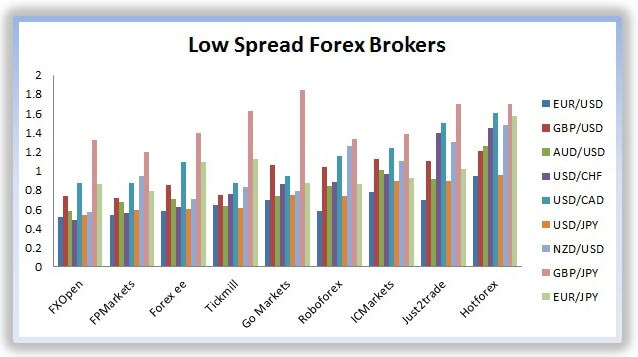
The impact of the spread on your trading performance compounds over time. A retail trader executing20 trades per month at 2 pips per trade on standard lot paying roughly $400 per month in spread alone. Reduce to 0.5 pips with a raw spread broker same activity only $100300 monthly difference translates directly into net profit
Low spread brokers are particularly critical for short-term strategies Scalpers and day traders rely on capturing small price movements, often just 5 to 15 trade. If spread consumes 2 of those pips before trade even starts, the strategy requires larger moves just to break even. Tight spreads give these traders a structural edge that is difficult to replicate through skill alone.
Even for longer-term traders, low spreads matter entry and exit. A position trader who enters and exits four major trades per month can still save of dollars annually by choosing a broker with tighter pricing. No strategy is entirely immune to the of high transaction costs.
Types of Structures Offered Brokers
Not all low spread brokers are structured same way. Understanding different spread models helps you identify which broker type best suits your trading style and strategy
Variable Spreads: These fluctuate based on market liquidity and volatility. During London New York overlap, variable spreads on major pairs can compress to extremely tight levels, often below 1 pip. During off-hours events, they can widen sharply.
Raw Zeroads with Commission: Many ECN and STP brokers pass interbank pricing directly to traders offering spreads that start at 0.0pips. Instead of embedding their revenue in the spread, they charge a flat commission traded. This model is generally most cost-effective for active traders, total cost per trade is transparent and predictable.
Key Factors to Evaluate When Comparing Spread Brokers
The advertised spread is just one data point. A thorough broker comparison looks at several interconnected factors that together determine your real trading cost overall experience.
Average vs. Minimum Spread: Many brokersise their minimum achievable spread, which may occur under ideal conditions fraction of the trading. Always look for data the average spread during your preferred trading hours to get a realistic cost picture.
Commission Structure: On raw accounts, the commission directly adds to your effective broker 0.0 pip spreads with a $7 round-turn commission per lot results in an effective cost of 0.7 pips, which is still competitive Compare cost not just the spread figure in isolation.
Execution Speed and Slippage: A broker advertising spreads but with significant slippage is not delivering the value its implies. Look for brokers with fast execution technology preferably withTP or ECN routing ensure your filled price reflects quoted spread.
Regulatory Status: Low mean nothing if the broker is not trustworthy. Prioritize brokers regulated top-tier authorities such as the FCA in the United Kingdom, ASIC in Australia, CySEC in the European Union, or CFTC and NFA in the United States. Regulation provides investor protections including segregated client funds and dispute resolution mechanisms.
Tight spreads on a slow unreliable platform can cost you more than slightly wider spreads on a fast, stable one. Evaluate platform's charting tools, order types, and uptime history alongside the broker's pricingTop Currency Pairs with Naturally Low Spreads
Certain currency pairs are structurally cheaper to trade due to their high liquidity and global trading volume. Understanding pairs offer the tightest spreads helps you direct your activity toward the most cost-efficient opportunitiesEUR/USD consistently carries the tightest spreads of any pair, often averaging below 0.5 pips atkers. USD/JPY, GBP/USD, USD/CHF, and USD/CAD also tend to be very liquid and cost-effective. AUD/USD andZD/USD sit slightly wider but remain the low-cost tier most majorkers. Cross pairs as EUR/GBP, EUR/JPY, and GBP/JPY typically somewhat wider spreads but are still at reasonable costs through brokers. Exotic pairs like USD/TRY, USD/ZAR, or EUR/SEK carry spreads that are multiples higher are generally reserved for traders with specific exposure needs rather than cost-efficiency goalsHow to Open Test Spread Broker Account
Before committing real capital, it always wise to verify broker's spread claims independently. Most reputable brokers offer demo accounts that mirror live Spend time on demo account specifically trackingads across different times of day, including Asian session open, and the New York close. Record the spreads you observe and compare them against the broker's published averages. When you ready to go live, consider starting with a smaller deposit and a micro account to further observe execution quality and real behavior live market conditions. Many brokers offer different account tiers, and spread account type is often worth the commission if you trade a meaningful volume. Pay attention to any additional fees that may erode the benefit of tight spreads, including overnight swap rates, inactivity fees, deposit withdrawal charges, and currency conversion costs. A broker that appears cheapest onads may offset advantage through fees elsewhere the account structureCommon Myths About Low Spread Forex
A persistent myth in forex trading communities is that low spread brokers are inherently riskier or less regulated than their higher-spread counterparts. This is not supported by evidence. Some the most reputable and heavily regulated brokers in the world offer raw accounts with extremely tight pricing Tight spreads and strong regulation are not mutually exclusive. Another common misconception is that zerospread accounts are always the cheapest option. As covered earlier, zero-spread accounts charge commissions that must be factored into the cost. Depending on your trade size and frequency, a wider variable no commission may actually practice. Finally, some traders assume that theightest spreads are only available to institutional high-volume clients. While some brokers do offer tiered pricing that rewards, many retailfocused ECN brokers offer competitive spread pricing from the first making-quality accessible to individual traders of all account sizes. Choosing a low spread forex broker is one of the highest-leverage decisions you can make as a trader. The savings compound over time, directly improving your net profitability without requiring change to your strategy risk management. Focus on total trade rather spread figure alone, verify regulatory credentials, test quality before committing significant capital, and match broker's account to your trading style. With the right broker in your corner, every save goes straight to your bottom line.Conclusion